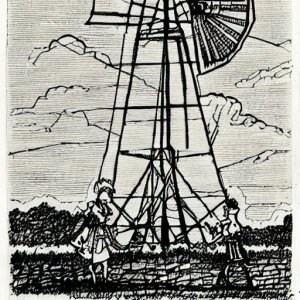
An artificial image rendered using the prompts related to the word “quixotic” as that what I feel like when writing and communicating about the evolution of technology as the pace of innovation accelerates leaves me and many of us feeling like we are at a stand still in a powerful current.
Some ideas are worth sharing, but we won't know until we share them...

The road to wisdom? Well, it's plain
and simple to express:

Err
and err
and err again
but less
and less
and less.

– Piet Hein via LessWrong

This is my first post in what I wish to be an interactive and generative discourse between me, my colleagues, my friends, readers, contributors wherever they come from. This is a welcome letter and a permission letter and a point of initiation.

Welcome to the Generative Discourse Initiative, a space where we celebrate the exploration and sharing of ideas without the suffocating pressure of always being precise and thorough. As someone who values logical positivism, thoroughness, and deep research, I have often found it difficult to express my ideas quickly and simply. However, in this era of rapid change and acceleration of new ideas and technologies, I feel I must learn to interact with each other and share knowledge in a way that is efficient and effective.

Many of us have lived through an incredible explosion of technological and scientific innovation. From the internet, mobile technologies, drones, improved biological and medical therapies. We are not only seeing many new ideas and tools become reality, but even the pace of those ideas is accelerating.  We were inspired to start this project by the broad adoption and availability of large language model tools that will likely spark a new wave of innovation and challenges.

That is why I was so excited that my friend Frank has started this joint project and named it Generative Discourse. The word generative reflects how we feel and interact with each other when we are exploring and searching for the truth. I feel we must be willing to make mistakes, learn, and reflect. The spirit of Karl Popper and the street of epistemology movements inspire us to explore new ideas with intellectual honesty and interaction. Larger truths and complete certainty are most likely impossible to ever achieve, so I try to endeavor to be less wrong, to learn by sharing ideas and sharing our experience with them.  As we are seeing a rapid rise in machine learning, large language models, artificial reasoning, and potentially artificial general intelligence and artificial consciousness, I feel that we will see need  for generative discourse to accelerate.

The word discourse represents the way we generate ideas through our interactions with each other. Whether we speak internally to ourselves or bounce ideas off friends and colleagues, we know that new ideas and new ways of thinking are born through discourse. The scientific method, which has helped expand the age of knowledge, is founded on communication and testing of ideas. improved knowledge and better truth are found through interaction and discourse.

We are here celebrate the exploration of ideas without the pressure of always being right or precise. We give ourselves the freedom to play with ideas and be wrong, knowing that it is through this process that we can improve our thinking and discover new ways of understanding the world around us. While rigor and precision are important, we must also allow ourselves the space to explore and experiment with ideas. By celebrating generative discourse, we can create a space where ideas are shared and explored without fear of being wrong, and where we can learn from each other and grow as thinkers...
Generative Inspiration
- LessWrong is an online forum and community dedicated to improving human reasoning and decision-making. We seek to hold true beliefs and to be effective at accomplishing our goals. Each day, we aim to be less wrong about the world than the day before.
- Street Epistemology is a method of engaging in conversation with others to explore their beliefs and how they arrived at those beliefs. The goal of street epistemology is to encourage critical thinking, expose inconsistencies or biases in one’s beliefs, and help people become more aware of how they form and justify their beliefs. This approach involves asking open-ended questions, listening actively, and encouraging the other person to reflect on their own thought processes. By engaging in street epistemology, individuals can gain a deeper understanding of their own beliefs and potentially shift their perspectives.
- Karl Popper was a philosopher of science who is best known for his idea of falsifiability. He believed that scientific theories cannot be proven true, but they can be falsified through empirical testing. Popper argued that a theory should be considered scientific only if it can be tested and potentially falsified. He also believed that scientific progress depends on critical thinking and the willingness to challenge established ideas. Popper’s ideas have had a significant impact on the philosophy of science and continue to influence scientific methodology and research today.
 GENERATIVE DISCOURSE
Leave a comment